
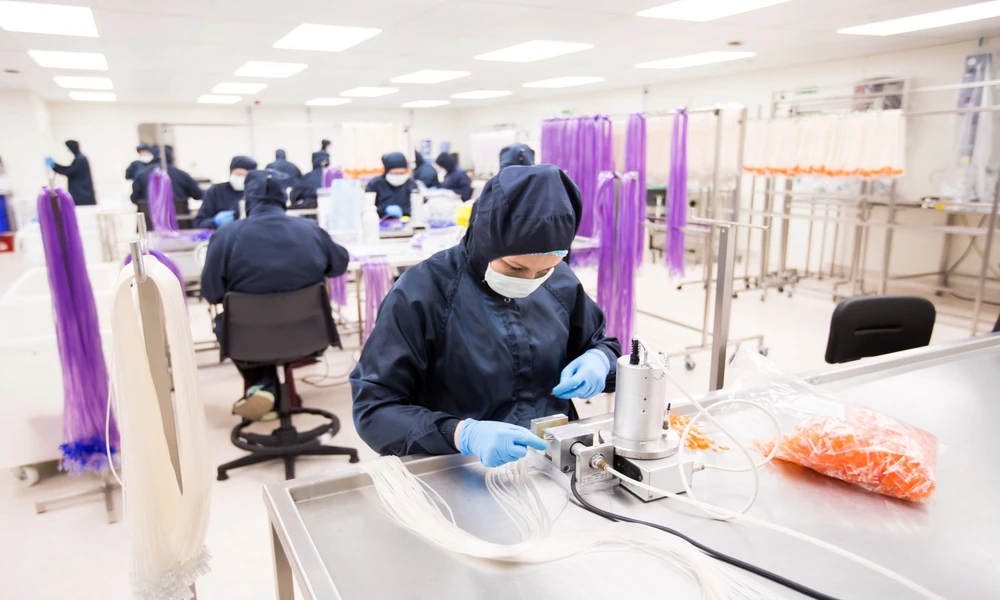
Medical device cleanroom assembly is the controlled-environment process step that separates components that are just manufactured from devices that are ready for clinical use. The cleanroom is not a formality or a regulatory checkbox. It is the physical environment where the contamination risks inherent in assembly, including particulate from handling, bioburden from surfaces and personnel, and cross-contamination between components, are controlled to levels appropriate for the device’s intended clinical application.
What Makes Cleanroom Assembly Different
Assembly done in a standard factory environment introduces contamination risks that are acceptable for many industrial products but not for medical devices intended to contact sterile body sites, be implanted, or interface with patient tissue. The human body is a poor environment for foreign particles, and the immune response to contamination in a surgical site or implant is clinically significant.
Medical device cleanroom assembly controls contamination through:
Particulate control: HEPA-filtered air at positive pressure relative to adjacent areas suppresses particle counts. Classification of the cleanroom to ISO 14644-1 standards defines the maximum allowable particle concentration at each size range.
Personnel control: garments, gloves, and behaviour protocols reduce the human contribution to cleanroom contamination. Personnel are the primary source of particles in most cleanrooms; gowning and training address this directly.
Surface and equipment cleanliness: work surfaces, tooling, and equipment are cleaned and monitored as part of the environmental monitoring programme.
ISO Cleanroom Classifications for Medical Devices
Medical device assembly cleanrooms are classified under ISO 14644-1. The ISO class defines the maximum number of particles per cubic metre at the relevant size thresholds. ISO Class 7 and ISO Class 8 are the most common environments for medical device assembly. ISO Class 5 is used for the most critical assembly steps, including filling of sterile liquid products and assembly of components that will contact sterile body sites directly.
The choice of classification is driven by the sterility risk category of the device and the assembly step. A device that will be terminally sterilised after assembly can tolerate a higher bioburden input than one that must be aseptically assembled, though both require environmental control.
“Singapore’s medical technology sector is built on the trust of patients and regulators around the world,” said former Health Sciences Authority chief executive John Lim. Clean medical device assembly is the manufacturing expression of that trust.
Cleanroom vs White Room
A white room is a manufacturing area that is cleaner than a standard factory environment but has not been validated or monitored to a defined ISO class. White rooms are used for some medical device assembly steps where contamination control is important but the regulatory requirement for a validated cleanroom does not apply.
Understanding whether the assembly steps for a specific device require a validated cleanroom or a white room is a regulatory and risk-based decision made during device design and manufacturing process development.
Documentation and Traceability
Cleanroom assembly for medical devices is a documented process. Each assembly lot is traceable through its production record to the components used, the operators who performed the work, the environmental monitoring data for the period, and the inspection results at each stage.
This documentation forms part of the Device History Record required under ISO 13485 and FDA Quality System Regulation. The ability to trace a device back to its assembly process is a fundamental requirement of medical device quality systems.
AMT Medical Device Cleanroom Assembly
AMT operates cleanroom assembly facilities for medical device cleanroom assembly projects at the classifications appropriate for the devices and assembly steps involved. Their quality systems support the documentation and traceability requirements of ISO 13485 manufacturing, providing customers with the assurance needed for regulated medical device supply.

Comments are closed.