
Category

Education

Category

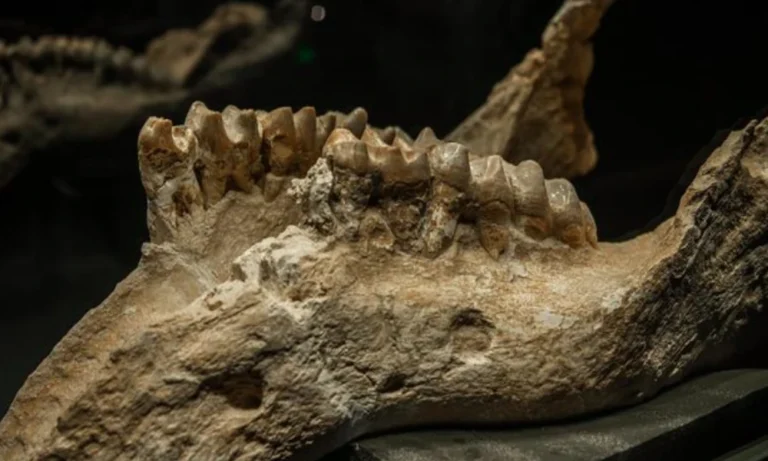
Florida’s interior holds a legendary secret buried beneath its pine scrub and oak hammocks. Millions of years ago, a shallow prehistoric sea covered this region, serving as a nursery for the ocean’s greatest apex predator. Today, this area is known to paleontologists and hobbyists alike as Bone Valley.

It is world-renowned for yielding fossils with unique, breathtaking preservation. For intrepid adventurers, the ultimate prize is a pristine Bone Valley Megalodon tooth. Discovering these rare treasures requires a mix of geological knowledge, patience, and specialized hunting techniques.

Understanding the Unique Geological Formation

The journey to finding a bone valley megalodon tooth begins with understanding the local stratigraphy. The Bone Valley Member is a unique geological formation rich in phosphate.

Over millions of years, the chemical interaction between the surrounding minerals and the organic material of shark teeth created a mineralization process unlike anywhere else on Earth.

Instead of the typical gray or black colors found in standard beach fossils, teeth from this region boast vibrant hues of white, blue, tan, and olive green. Knowing where these specific phosphate beds sit beneath the topsoil layers is the crucial first step for any successful fossil hunter.

Scouting the Perfect Hunting Locations

Fossil hunters rarely stumble upon these prizes by walking through random fields. They must locate areas where nature or human activity has exposed the ancient, deeply buried phosphate layers.

Active and abandoned phosphate mines are prime territory, though they generally require strict, hard-to-obtain corporate permissions.

Consequently, many hunters focus on public riverbeds, shallow creeks, and specialized gravel pits where erosion has naturally peeled away the overlying sediment. By studying topographical maps and local water tables, hunters can pinpoint exactly where streams cut directly into the fossiliferous strata.

Mastering the Shallow Water Sifting Technique

Once a promising creek or river stretch is identified, hunters employ the sifting method. This technique involves wading into the water with a specialized, floating screen mesh.

Hunters use shovels to scoop gravel from the bottom of the riverbed, focusing heavily on the downstream side of large boulders or fallen logs where heavy fossils naturally settle.

The gravel is then dumped into the sieve and shaken vigorously. As the sand washes away, beautiful fragments of ancient life appear, occasionally revealing the magnificent serrations of a Bone Valley Megalodon tooth.

Exploring Inland Pits and Land Matrix

Not all successful hunting happens in the water. Some fossil enthusiasts prefer dry-land digging in construction sites, agricultural fields, or permitted quarry areas. This method requires looking for the distinctive grayish-green clay or loose pebble matrix that signifies the prehistoric seabed.

Land digging is physically demanding, often requiring hours of shoveling and scraping through dense, compacted earth.

However, the reward for this dry excavation can be an incredibly intact Bone Valley Megalodon tooth that has been perfectly cushioned by soft clay, completely protected from the abrasive tumbling of river currents.

Identifying Authentic Tooth Characteristics

Distinguishing a true find from other shark specimens requires an eye for detail. A Megalodon tooth is recognizable by its massive size, thick root, and a distinct V-shaped scar called the bourlette. What truly sets a specimen from this specific region apart, however, is its color palette.

The unique phosphate composition infuses the enamel with striking color combinations. When a hunter pulls a tooth from the screen, checking for these specific mineral stains and heavy mineralization helps confirm they are holding an authentic piece of this region’s ancient marine history.


The rise of YouTube tutorials has changed how people learn music, especially younger learners who prefer quick explanations and accessible demonstrations. Yet despite the convenience of online videos, many learners in the city-state still choose structured training through formal classes. The question is whether music lessons in Singapore remain relevant—or if free online content has replaced the need for them entirely.

The Limits of Self-Learning Through YouTube

YouTube offers an immense library of tutorials covering every instrument, every genre, and every technique imaginable. It can even feel empowering for beginners to pick up simple chords or melodies without paying for a class. But the platform has clear limits, particularly when it comes to building strong foundational skills. Learners often struggle with inconsistency, as tutorial quality varies widely and many videos simplify techniques to keep viewers engaged. Mistakes, without feedback, become habits, and those habits are harder to correct later.

This approach becomes even more obvious for students pursuing electric guitar lessons. Many YouTube videos focus on riffs, covers, and shortcuts rather than technique, posture, tone control, or structured progression. Due to this, learners may replicate the sound but not develop the skills needed for more complex playing. The lack of real-time guidance often slows progress rather than accelerating it.

Why Structured Lessons Still Matter

Music lessons remain relevant because they offer structure, accountability, and tailored guidance—things a video library cannot replicate. A trained instructor can identify weaknesses immediately, demonstrate the correct approach, and adjust lessons based on the learner’s pace. This approach reduces frustration and prevents bad habits from forming. In addition, many students benefit from the discipline that comes with a weekly class, as it encourages consistent practice and gives learners a clear sense of progression.

Another reason formal lessons remain important is musical literacy. YouTube rarely teaches theory in a way that builds long-term understanding, yet theory is essential for improvisation, composition, and understanding how music works. A teacher can break down concepts in a way that is relevant to the learner’s goals, making the process far less overwhelming.

Learning in a Local Context

The region’s learning culture places strong emphasis on measurable progress and guided development, which makes structured lessons a natural fit. Music schools integrate graded examinations, performance opportunities, and progress tracking—elements that help students stay motivated. Parents also value the credibility that comes with established programmes, which explains why music lessons continue to thrive despite the abundance of online content.

Formal lessons for adults offer a way to learn efficiently within limited free time. Rather than browsing endless videos and guessing where to start, a curated syllabus helps them progress steadily. This instance is particularly true for electric guitar students, who often want to move quickly into genres like rock, blues, or metal. A skilled instructor offering electric guitar lessons in Singapore can shortcut the trial-and-error process and introduce techniques that would take months to piece together from online videos.

Balancing Online Resources with Formal Training

YouTube still has a place in modern music learning. Many students use it for reinforcement, inspiration, and exposure to different styles. Once paired with structured lessons, online videos become supplementary rather than primary resources. This balanced approach helps learners stay motivated without relying solely on videos that may not match their skill level.

YouTube also supports independent practice. Students can revisit techniques, watch additional demonstrations, or explore genres outside their lessons. However, it works best when guided by a teacher who ensures that learners do not adopt incompatible methods or skip foundational steps.

Conclusion

Music lessons in Singapore remain relevant because they deliver what YouTube cannot: personalised guidance, structured progression, and real-time correction. While online tutorials are useful for inspiration and self-paced practice, they cannot replace the long-term benefits of a trained instructor who understands the learner’s goals. In reality, the strongest results often come from a combination of both approaches, where students enjoy the freedom of YouTube while benefiting from the discipline and expertise of formal lessons.

Contact Sonare Music School to take your musical skills beyond YouTube tutorials.

Parents often turn to a maths tuition centre when their children transition into more advanced topics in secondary school. Many also consider math tuition for secondary levels because the shift from primary to secondary introduces faster pacing, unfamiliar concepts, and heavier workloads. Students sometimes feel overwhelmed by the sudden jump in complexity, which makes structured guidance more important. With the right support, they can adapt confidently and stay consistent throughout the school year.

1. Higher Complexity In Algebra And Equations

Secondary students notice an immediate change in the depth of algebra. A maths tuition centre helps them understand more complex equations, including simultaneous equations, algebraic manipulation, and functions. Tutors offer step-by-step guidance to help students recognise patterns and apply rules correctly. Math tuition for secondary levels supports this learning by giving students targeted practice that builds fluency in these concepts, which are essential for later topics.

2. Difficulty Adjusting To Faster Pacing

Lessons move quickly in secondary school, especially during new chapters. A maths tuition centre provides reinforcement so students can revisit difficult topics without falling behind. Tutors explain concepts clearly and highlight the core ideas students must master. Math tuition for secondary levels becomes helpful here because it offers structured review sessions that allow students to catch up while strengthening their understanding.

3. Struggles With Multi-Step Problem Solving

Secondary maths introduces longer questions that require multiple steps and careful analysis. Many students struggle with identifying the correct approach. A maths tuition centre teaches them how to break questions into smaller parts and choose the right strategy. Math tuition for secondary learners reinforces this through guided examples that show how each step contributes to the final solution. Over time, students become more confident when handling unfamiliar problems.

4. Challenges With Abstract Concepts

Some topics feel abstract, especially when students encounter geometry proofs, indices, or trigonometry. A maths tuition centre helps make these ideas clearer by connecting them to visual methods or real-world applications. Tutors explain why formulas work instead of relying on memorisation. Math tuition for secondary levels continues this support by giving students varied exercises that strengthen conceptual understanding and reduce confusion.

5. Pressure From Increasing Exam Demands

Secondary exams demand accuracy, time management, and a deeper understanding. A maths tuition centre prepares students by exposing them to exam-style questions and teaching them how to avoid common mistakes. Tutors help students practise under timed conditions to build confidence. Math tuition for secondary levels expands this training by focusing on answering strategies that improve speed and clarity during major assessments.

6. Lack Of Confidence During Transitions

Students often lose confidence when they encounter sudden jumps in difficulty. A maths tuition centre provides encouragement while helping them rebuild their understanding step by step. Tutors address misconceptions early so students can progress without feeling discouraged. Math tuition for secondary students offers steady support that helps them stay motivated even during challenging topics.

7. Learning Gaps That Accumulate Over Time

Small gaps from previous years can become barriers to new topics. A maths tuition centre identifies these gaps during early sessions and provides targeted guidance to fix them. Students improve faster when they understand the links between older concepts and new material. Math tuition for secondary levels strengthens this process by revisiting essential foundations to ensure students do not struggle with advanced lessons later on.

Conclusion

Secondary maths introduces new levels of complexity, which can feel overwhelming without the right support system. With dedicated guidance, students can understand difficult topics, manage faster pacing, and build confidence in problem-solving. A structured learning approach gives them the clarity they need to stay on track and perform well in school. Effective support helps them approach new challenges with a more focused and steady mindset.

Contact Supermath to discover more about structured programs that enhance secondary maths study.