
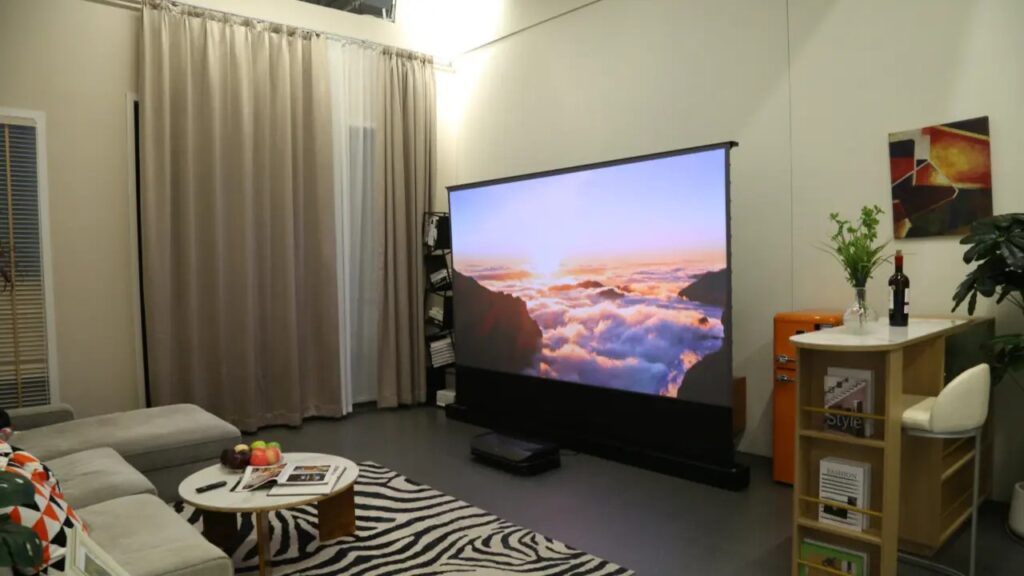
Home theaters have evolved significantly over the past few decades, from basic TV setups to fully immersive cinematic experiences. With technology continuously advancing, there’s no shortage of exciting new trends shaping the future of home entertainment. From ultra-realistic visuals and advanced sound systems to the potential role of virtual reality, these innovations are set to transform how we experience movies, gaming, and even live events in the comfort of our homes. In this blog, we’ll explore some of the cutting-edge technologies—such as the 4K ultra short throw projector, Dolby Atmos sound, and virtual reality—that are changing the home theater landscape.
1. The Rise of 4K Ultra Short Throw Projectors
Projectors have always been a popular choice for home theater enthusiasts who want to create a cinema-like experience at home. However, traditional projectors require a significant amount of space between the projector and the screen to deliver a clear and large image. Enter the 4K ultra short throw projector, which is quickly becoming a game-changer in home theater technology.
An ultra short throw projector can display an image at a much shorter distance from the screen—sometimes just a few inches away—without sacrificing image quality. This allows homeowners to place their projectors closer to the screen, which is perfect for smaller spaces. What’s more, 4K ultra short throw projectors deliver stunning visual clarity, with resolutions four times greater than traditional 1080p projectors. This ensures sharper images, richer details, and more vibrant colors, especially when paired with 4K streaming content or UHD Blu-rays.
The ability to install these projectors directly below or above the screen also eliminates the clutter of ceiling-mounted projectors, making them ideal for modern, minimalist home theaters. As the cost of 4K ultra short throw projectors continues to decrease, these devices will likely become a mainstream option for home theater enthusiasts seeking top-tier visuals without compromising on space.
2. Dolby Atmos: Immersive Sound Like Never Before
While visuals are crucial to the home theater experience, sound is just as important—if not more so. One of the most exciting developments in home theater audio technology is Dolby Atmos, an advanced sound system designed to create a truly immersive audio environment.
Unlike traditional surround sound systems, which use speakers placed around the room, Dolby Atmos adds a vertical dimension to the audio experience. With specialized overhead speakers or upward-firing speakers, sound can move in all directions, creating the illusion that audio is coming from above, below, or all around you. This is especially impactful during action-packed scenes or intense soundscapes in movies, where the viewer feels fully enveloped in the sound, whether it’s the roar of a spaceship or the rumble of thunder.
As Dolby Atmos technology advances, it’s expected that more affordable home theater systems will support it, making it accessible to a broader range of users. Additionally, advancements in soundbar technology will allow users to enjoy the benefits of Dolby Atmos without the need for complex speaker setups, providing a more streamlined and space-efficient option for homeowners.
3. 8K Resolution and Beyond
While 4K has already revolutionized visual quality in home theaters, 8K resolution is the next frontier. With four times the pixel density of 4K (and sixteen times that of 1080p), 8K offers an incredibly detailed and lifelike viewing experience. Although 8K content is still relatively scarce, the availability of 8K TVs and projectors is steadily increasing, paving the way for future growth.
In addition to providing a sharper image, 8K resolution will benefit larger screen sizes, which have become increasingly popular in home theaters. With an 8K display, even large screens can maintain a crisp and clear image without any pixelation, offering an immersive viewing experience that feels more real than ever.
However, for 8K to truly take off, content creators need to produce more 8K-compatible material, and internet speeds will need to improve to accommodate the larger file sizes of 8K streaming. But as these hurdles are addressed, 8K resolution will likely become a more common feature in home theater systems.
4. Virtual Reality (VR) in Home Theaters
As the virtual reality industry continues to mature, it’s not hard to imagine a future where VR is integrated into home theater setups. Currently, VR is primarily used for gaming, but its potential to enhance the home theater experience is immense.
In a VR-enabled home theater, users could experience movies, concerts, or games as if they were physically in the scene. Using VR headsets and specialized controllers, viewers could look around a 360-degree virtual space, allowing them to interact with the content in entirely new ways. For example, imagine sitting in a concert hall and being able to view the entire stage, or entering the world of your favorite movie and exploring every corner of the set.
The use of 360-degree video and VR streaming platforms could make this a reality in the near future. As VR technology continues to improve in terms of graphics, comfort, and accessibility, it could become a mainstream feature in home theater setups, offering a truly next-level, immersive entertainment experience.
5. Smart Home Integration and Automation
Another exciting trend in the home theater world is the growing integration of smart home technology. Today, many home theater systems can be controlled via smart assistants like Amazon Alexa or Google Assistant, allowing you to adjust volume, lighting, and even screen brightness using voice commands.
But future home theaters will go beyond just voice control. They will feature full automation, where the system can adjust based on preferences or time of day. For example, when you start a movie, your home theater system could automatically dim the lights, close the curtains, adjust the temperature, and set the perfect audio settings for your space.
Moreover, smart TVs and projectors will increasingly offer enhanced connectivity with streaming services, making it easier to access content without the need for external devices. The future of home theater will be seamless, connected, and personalized to your exact preferences.
Conclusion: The Future of Home Theater
The future of home theater technology is incredibly exciting, with innovations in laser projector, Dolby Atmos sound, 8K resolution, virtual reality, and smart home integration transforming the way we enjoy entertainment. As technology continues to evolve, the home theater experience will become even more immersive, convenient, and customizable, bringing the magic of cinema right to your doorstep. Whether you’re upgrading your current system or building a brand-new home theater, these upcoming trends will provide the perfect foundation for creating a truly exceptional entertainment space.