
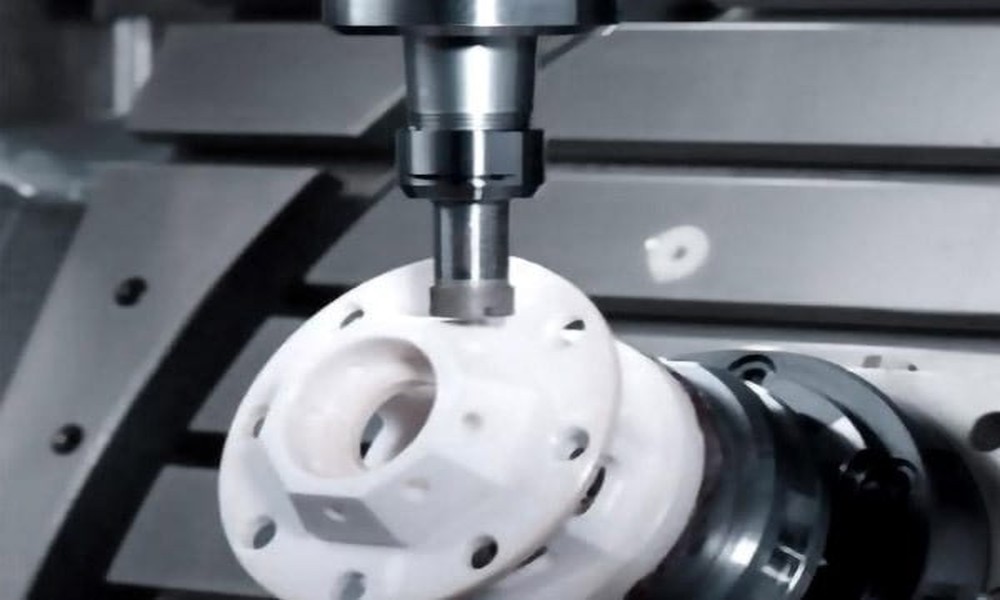
Ceramic injection molding has emerged as a formidable alternative to traditional machining methods, prompting manufacturers to reconsider their approach to ceramic component production. The choice between these two technologies is not simply a matter of selecting the newer option over the established one. Rather, it requires careful consideration of numerous factors, each weighted according to the specific demands of your project, budget constraints, and long-term manufacturing strategy.
The Fundamental Differences
Before evaluating which method proves superior for particular applications, one must understand the fundamental distinctions between these approaches. CIM builds components by injecting a mixture of ceramic powder and binder into moulds, followed by debinding and sintering to achieve the final part. CNC machining, conversely, removes material from a solid ceramic block through cutting, drilling, and grinding operations.
These opposing philosophies lead to markedly different outcomes in terms of what each process can achieve, how economically it operates, and which applications suit it best. The additive nature of ceramic injection moulding contrasts sharply with the subtractive character of CNC work, and this distinction ripples through every aspect of production planning.
Complexity and Design Freedom
One area where ceramic injection molding demonstrates clear advantages concerns geometric complexity. The process accommodates intricate internal features, multiple undercuts, and thin-walled sections that would prove extraordinarily difficult or impossible to machine. Components requiring threads, complex curves, or integrated features benefit substantially from the moulding approach.
CNC machining faces inherent limitations when confronting complex geometries. Each feature requiring a tool to access from a different angle necessitates additional setups, increasing both time and cost. Internal features present particular challenges, sometimes proving entirely inaccessible to cutting tools. For straightforward shapes, however, CNC offers a direct path from raw material to finished component without the intermediate steps that moulding requires.
Production Volume Considerations
The economics of these two methods diverge significantly based on production quantities. Ceramic injection moulding demands substantial upfront investment in tooling, with precision moulds often representing considerable expense. This initial cost, however, distributes across all parts produced, making the per-unit cost decrease substantially as production volumes increase.
Singapore’s ceramic injection molding industry has demonstrated this principle effectively, with facilities optimised for medium to high-volume production achieving impressive economies of scale. For runs exceeding several thousand parts, the moulding approach typically proves more economical.
CNC machining presents a different economic profile:
- Minimal setup costs allow economical production of small quantities
- Per-unit costs remain relatively constant regardless of volume
- Prototype and low-volume production often favour machining
- No tooling investment required for design changes
Precision and Tolerances
Both methods can achieve impressive precision, though through different means. Injection moulded ceramics typically require careful attention to shrinkage during sintering, with parts shrinking by 15 to 20 per cent during the firing process. Experienced manufacturers compensate for this through precise tool design, but achieving extremely tight tolerances sometimes necessitates post-sintering machining operations.
CNC machining offers more straightforward dimensional control, with tolerances limited primarily by machine capability and material properties. For applications demanding the tightest possible tolerances without secondary operations, machining may prove preferable. Yet for many applications, the precision achievable through ceramic injection moulding proves entirely adequate and comes at lower cost for volume production.
Material Utilisation and Waste
The efficiency with which each process uses material deserves consideration, particularly as ceramic powders represent significant raw material costs. CIM technology generates minimal waste, with excess feedstock typically recyclable for subsequent production runs. The process adds material only where needed, avoiding the removal of expensive ceramic material.
CNC machining, by its nature, removes material to create the desired shape. Complex parts may require removing 70 to 90 per cent of the starting block, representing substantial material waste. Whilst ceramic dust can sometimes be reclaimed, the process proves less efficient than moulding from a material utilisation standpoint.
Lead Times and Flexibility
The time from design to finished part differs considerably between methods. CNC machining offers rapid turnaround for initial parts, with production beginning as soon as CAD files are prepared and raw material acquired. Design modifications require only programming changes, allowing quick iteration during development phases.
Ceramic injection molding, conversely, requires tool fabrication before production begins, extending initial lead times. Singapore’s ceramic injection molding facilities have worked to minimise these delays through advanced tooling techniques, yet several weeks typically elapse before first articles emerge. Once tooling exists, however, production proceeds rapidly, with cycle times measured in seconds or minutes per part.
Making the Decision
Selecting between these technologies requires honest assessment of your project’s characteristics. Consider ceramic injection molding when you require complex geometries, anticipate medium to high production volumes, can accommodate longer initial lead times, and seek to minimise per-unit costs. The process excels for components where its design freedom and production efficiency align with project requirements.
CNC machining suits projects requiring small quantities, simple to moderate geometries, rapid prototyping, or extremely tight tolerances without secondary operations. The flexibility to modify designs without retooling proves valuable during development phases or for custom work.
Rather than viewing these as competing technologies, thoughtful manufacturers recognise them as complementary tools, each suited to particular circumstances. Some projects benefit from CNC-machined prototypes followed by tooling for volume production through ceramic injection molding.

Comments are closed.