Category

Home Improvement

Category

The Mazda BT-50 Perth has long been a dark shadow in the automotive world. It was viewed as a second-class citizen among its pickup competitors, an afterthought in a category loaded with legendary nameplates like the Ranger, Strada, and Hilux. It was previously created in collaboration with Ford, although this is only sometimes converted into market success. Isuzu collaborated with Chevrolet to produce the Colorado, MUX, DMAX, and Trailblazer.

Unfortunately, Chevy shuttered its production factory, leaving Isuzu without a “buddy” in the pickup industry. Mazda and Isuzu formed a new cooperation, resulting in the new DMAX and MUX and a revitalised BT-50. The question is whether the BT-50 can finally create a more significant impression and stand independently.

Design

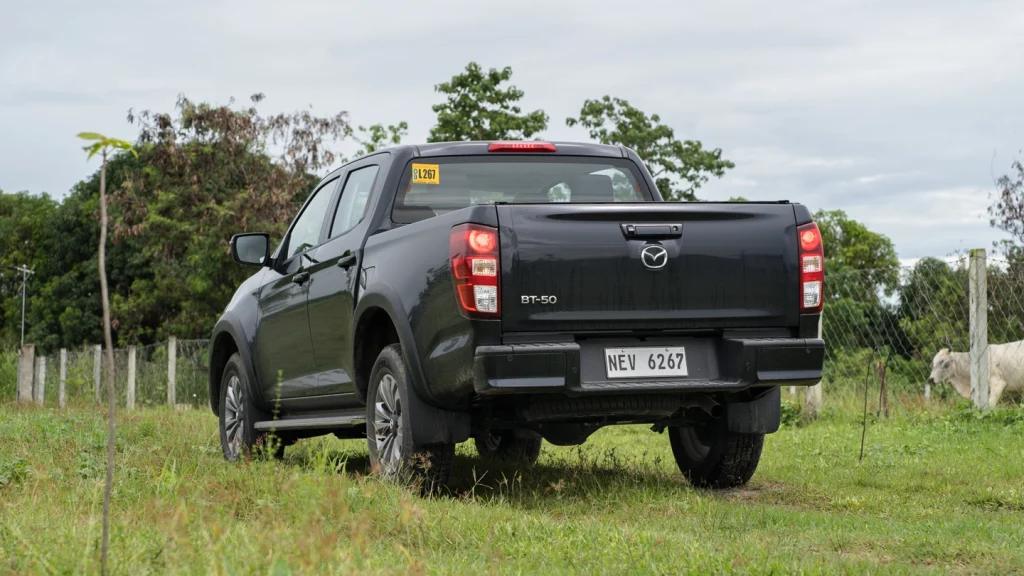
Mazda is all about its “Kodo” design, which has appeared on all of its models in recent years, except the earlier generation BT-50. Now that the award-winning Mazda design has reached BT-50 pickups, it no longer seems to be an out-of-place adopted sister.

The Kodo design of the Mazda BT-50 was imposed on a pickup body.

In practice, it works, and it works well. We’re accustomed to seeing pickups with minimalist and muscular shapes; although the BT-50 still has a firm appearance, the Kodo design adds sophistication and flair to the overall appearance.

Interior

Here’s where the Mazda influence is most noticeable; even if you’re not a professional, you can see Isuzu let Mazda have its way with the inside.

The interior is elegant yet practical, with a sprinkling of soft-touch materials providing a feeling of elegance without detracting from the functional essence of a real truck. You will also appreciate how the piano’s black materials were kept to a minimum to reduce the possibility of scratching up specific panels.

It should also be noted that Mazda improved the interior ergonomics; everything is simple and easy to use. All of the essential buttons and functionalities are easily accessible.

Regarding features, you get two analogue gauges flanked by a tiny digital display screen with vehicle information. The infotainment system has a 7-inch LCD screen with Android Auto and WiFi Apple CarPlay.

Overall, the Mazda BT-50 interior successfully balances elegance and practicality.

Engine

Isuzu has taken over responsibility for the department that is responsible for the powertrain. The Mazda BT-50 has a 3.0-litre turbo diesel engine capable of producing 190 horsepower and 450 newton-metres of torque. A 6-speed automatic gearbox is responsible for transmitting the power to the vehicle’s rear wheels.

Driving Impressions

The 3.0-litre turbo diesel engine called 4JJ3-TCX powers all Mazda BT-50s. That’s hardly unexpected, given that this is the same engine used in the D-Max and Mu-X. In the case of our 44 models, this is coupled to a 6-speed automatic transmission. You’d be correct if you anticipate the Mazda BT-50 to drive similarly to the D-Max.

It has leaf springs at the rear axle, and although it has the natural stiffness of such a setup, it’s never harsh like a Toyota Hilux. As you take it around a curve, the BT-50 steers competently but not in the dynamic style you’d expect from a Mazda MX-30 hybrid or passenger car. The hydraulic steering provides an excellent driving feel, although it isn’t as quick as a standard Mazda.

This implies that the Mazda BT-50 from Mazda dealers Perth is among the best in the class regarding ride and refinement. It has leaf springs at the rear axle, and although it has the natural stiffness of such a setup, it’s never harsh like a Toyota Hilux. As you take it around a curve, the BT-50 steers competently but not in the dynamic style you’d expect from a Mazda MX-30 hybrid or passenger car. The hydraulic steering provides an excellent driving feel, although it isn’t as quick as a standard Mazda.

How the suspension handles the truck’s body movements also contributes to its exceptional handling (for a pickup). Body roll is there but isn’t extreme and appears in a regular pattern. Road noise is adequately suppressed, and there is barely any wind noise from the wing mirrors, indicating excellent refinement.

The BT-50’s 3.0-litre turbo diesel engine does not produce class-leading statistics. It generates 190 horsepower and 450 Nm of torque, much like the D-Max, but it also has an extensive torque curve that makes this pickup easy to overtake. Similarly, the 6-speed automated transmission linked to this engine shifts smoothly. The machine is one of the BT-50 and D-best Max’s features. Yeah, it has comparable fuel efficiency numbers of 10.6-11.2 km/l.

The one area where the BT-50 outperforms the D-Max is in off-road performance. The BT-50 lacks a custom 4×4 powertrain, although it does feature a locking rear differential, which a top-trim LS-E 4×4 variation of the D-Max lacks. If the D-Max becomes stuck on a trail, it will direct its power to the wheel with the least grip, but the BT-50 would quickly escape such a position. We need to understand why the more costly D-Max doesn’t have this critical off-roading function.

Practicality and Space

The practical elements of the Mazda BT-50 are almost identical to those of the D-Max, which means they have the same rear seat comfort and capacity and the same amply sized bed. We don’t have payload estimates for the BT-50 as we have for the D-Max, but we’re convinced it can carry at least a metric tonne of cargo. Oh, and depending on when you read (or watch) this review, all Mazda BT-50s come included with fender flares and a bed cover.


It also now stands on its own. Despite its “connection” with its Isuzu brothers, the Mazda BT-50 stands out as a more sophisticated and distinct alternative for individuals wishing to separate.

Ultimately, the relationship between Isuzu and Mazda has benefited both companies. Isuzu delivers durability and reliability, while Mazda adds ergonomics and refinement.

It’s time to treat the Mazda BT-50 seriously, and those who do will not be disappointed.

Commercial air conditioning is one of the essential HVAC solutions when running a business, especially in the sweltering summer heat. Early August brings triple-digit warmth, so you don’t want it to give out on you then.

You may have noticed the building wasn’t as cool as it should have been last summer. The problem was that it made your workers and customers uneasy and drove your costs. Or you may be relocating to a new building and need to set up commercial HVAC systems there. There are benefits to your wallet and your HVAC system’s efficiency when it is tailored to your specific requirements.

When planning an HVAC installation for a business, there are a few things to remember. Extreme temperatures are constantly testing the heating and cooling systems in Nevada. Here are some things to think about to ensure your new setup can handle anything that comes its way.

Size of Space

Power consumption for commercial cooling and heating systems can be substantial. Correctly sizing machinery to a business facility reduces wasted energy and unnecessary cycling. The likelihood of needing more than one HVAC system increases as building size does.

A skilled commercial electricians Perth will perform a load calculation to establish the ideal system configuration for your building. All aspects of the property are considered to ascertain the optimal cooling and heating loads.

Type of the System

Today, many different kinds of HVAC solutions are utilised in commercial buildings, distinct from the HVAC systems used in residential settings. The following is an overview of the many options that, depending on the size and layout of your building, might be suitable for meeting your requirements.

Position of the Building

Your building’s location offers some advantages when it comes to how it may be heated and cooled. There are situations when someone does this on purpose. One such illustration is passive solar design, which involves heating and cooling a room by exposing it to the sun’s rays. Rooftop units and strategically positioned windows are two more architectural concepts.

If the location of your building results in a heating or cooling impact, the heating, ventilation, and air conditioning (HVAC) system you decide to install should consider this effect.

Interior Temperature Considerations

Certain business establishments have internal operations that have a discernible impact on the temperature of the surrounding environment. For instance, if your building has a kitchen or a manufacturing section where equipment creates heat, the temperatures in those areas will be greater than the rest of the structure. Zone-controlled systems are preferable to centralised heating and cooling sources because, for example, dining and reception rooms may maintain a lower temperature than other building parts.

Size of the System

The machinery you put into your business area must have the appropriate dimensions. In this instance, “sizing” does not relate to the unit’s size. It is the process of determining your heating and cooling requirements and locating a system that has the operational ability to fulfil those requirements.

If the system you choose is too tiny, it will be necessary to operate it to maintain a comfortable temperature in the building. It could increase energy expenses and repair fees if it breaks down due to the strain. Conversely, if it is enormous, the structure will get uncomfortably cool too fast. That will hasten the on-and-off cycle, making it hard to dehumidify the air to an adequate degree.

You will be able to manage the size of the heating, ventilation, and air conditioning (HVAC) system that is required, as well as your commercial air conditioning installation and energy expenses, if you install doors and windows that are energy efficient. In addition to that, this will assist in making sure that the structure has enough insulation.

Your Ductwork’s Condition

Ensure the ductwork is in excellent order before investing in a new HVAC system. Up to 20% of conditioned air might be lost due to leaky or faulty ducts. An HVAC professional may inspect the ductwork and advise on whether it needs to be updated or modified before the new system is installed. Especially for older structures, new ducting may be required. Ventilation in a business building that has undergone extensive renovation or remodelling may need the installation of new, bespoke ductwork.

If your building still needs to get a centralised ducting system, you will have to determine whether you want to spend money on installing ducts or go with a ductless system instead.

After determining how much money you can spend on the installation, you should start gathering quotes from HVAC service companies in your area. The price of each one will cover not only the supplies but also the labour required to install them.

When planning to install an air conditioning unit as one of your HVAC solutions, you should consider all of these considerations. Furthermore, remember that you can purchase a thermostat that will improve the energy efficiency of the air conditioning machine; these controls will prevent energy from being wasted.


As we go about our lives, we tend to accumulate items that we don’t necessarily need or use. These items can take up valuable space in our homes, leading to clutter and disorganization. If you’re looking to declutter your home in Singapore, getting rid of unwanted items is a crucial first step. In this article, we’ll provide you with tips and tricks to make the decluttering process as smooth and stress-free as possible.

Create a Sorting System

The first step to decluttering your home is to create a sorting system. This system will help you organize your items into categories, making it easier to decide which ones to keep and which ones to discard. You can use boxes or bags to sort your items into categories such as:

  • Keep: Items you use regularly or that have sentimental value
  • Donate: Items that are still in good condition but that you no longer need or want
  • Sell: Items that are in good condition and that you think you can sell
  • Discard: Items that are broken, damaged, or that you can’t donate or sell

Start with Small Spaces

Decluttering can be overwhelming, especially if you have a lot of items to go through. To make the process more manageable, start with small spaces such as drawers, closets, or a single room. This will help you build momentum and feel a sense of accomplishment as you complete each area.

Use the Four-Box Method

The Four-Box Method is a popular technique used for decluttering. It involves using four boxes labeled as Keep, Donate, Sell, and Discard. As you go through your items, place each one into the appropriate box. This method can help you stay focused and make decisions quickly.

Consider Sentimental Items

One of the biggest challenges of decluttering is letting go of sentimental items. These can be items such as old photos, letters, or mementos from important events. When deciding whether to keep or discard sentimental items, ask yourself if the item brings you joy or if it’s just taking up space. If it’s the latter, consider taking a photo of the item to keep the memory and discarding the physical item.

Donate or Sell Items

Once you’ve sorted your items into the Donate or Sell boxes, it’s time to decide where to take them. In Singapore, there are many organizations and websites where you can donate or sell your items, including:

  • The Salvation Army
  • Carousell
  • Facebook Marketplace

Dispose of Items Responsibly using a Junk disposal Service

For items that are broken, damaged, or cannot be donated or sold, it’s essential to dispose of them responsibly. In Singapore, you can dispose of bulky items such as furniture and appliances through bulky item junk disposal service like Waste Disposal @ SG. For smaller items, you can use the NEA’s e-waste recycling program or bring them to a recycling bin.

Conclusion

Decluttering your home can be a daunting task, but it’s essential to creating a space that is organized and functional. By creating a sorting system, starting with small spaces, and using techniques such as the Four-Box Method, you can make the process easier and more manageable. Remember to consider sentimental items and donate or sell items that are still in good condition. Finally, dispose of items responsibly to ensure that they don’t end up in landfills. With these tips and tricks, you’ll be on your way to a clutter-free home in no time.